

Further Books
Recap. Part 2 and Part 3 in this series have shown how the Huber books and the introductory overviews by Joyce Hopewell came to be published.
The world did not stand still, and various authors made further contributions to the increasing richness of the literature on astrological psychology.
Astrolog – The Shellens bequest

APA received a bequest from the estate of Agnes Shellens, who had been the translator of a lot of the early Huber works into English. We decided to use this money to enable translation and publication in English of a number of articles from the German-language magazine, Astrolog, then produced monthly by API in Switzerland. This was where many German-speaking astrological psychologists shared their thinking and researches.
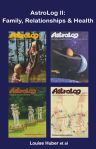
Barry selected the articles, assisted by David Kerr, and we again engaged Heather Ross to do the translation. The result of this generous gesture was two books published in 2008/9: Astrolog I: Life and Meaning, and Astrolog II: Family, Relationships and Health.
The Esoteric Context
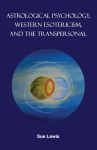
After API graduate Sue Lewis completed a Masters degree in Western Esotericism, she produced a text that we jointly developed into the book Astrological Psychology, Western Esotericism and the Transpersonal, published in 2015. Sue gives astrological psychology and the Hubers and their psychological/astrological approach a clear place in the stream of human development that has been termed Western Esotericism.
Psychotherapy and dreams
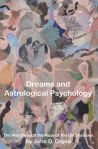
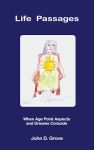
In collaboration with another APA graduate, psychotherapist John Grove, we published John’s two books relating astrological psychology to the importance of dream interpretation: Dreams and Astrological Psychology (2014) and Life Passages: When Age Point Aspects and Dreams Coincide (2017). These were also made available as ebooks.
Next steps
We have now reached the point in the story of the Hopewell books where APA itself, the English Huber School, was reaching the end of the road as a teaching organisation. The next instalment will cover what happened during and since this process.


Leave a Reply