
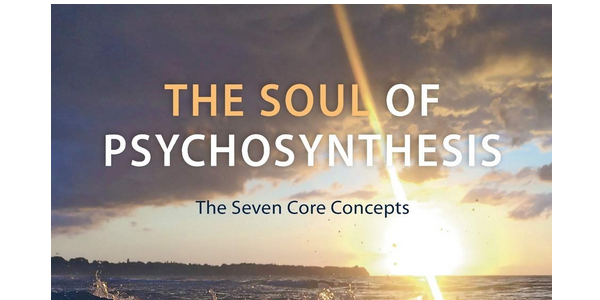

Astrological Psychology was created in collaboration with Roberto Assagioli, the founder of psychosynthesis, the ‘psychology with a soul’. The psychosynthesis model of humans is as spiritual beings. It is useful to remind ourselves from time to time of what this really means for us in our individual growth process. I recently read Kenneth Sørensen’s 2016 book The Soul of Psychosynthesis: The Seven Core Concepts, which reminds us of the main features of this path. The quotes interspersed in this text are from the book, aiming to give you a taste of the content.
“The purpose of our being is to awaken to the divine potential we are here to unfold and manifest.”
Sørensen particularly suggests that psychosynthesis is very consonant with the ideas of other modern psychological pioneers, including Abraham Maslow and Ken Wilber (Integral Psychology).
“Psychosynthesis is… integrative. It is an attempt to fuse the deep wisdom of the Self coming from the East with modern western psychology and its insight into the unconscious… to unite all living beings with their divine source through the energy of Love and Will.”
The Soul or Psychosynthesis highlights seven interrelated fundamental factors whose deep experience and understanding are central to Psychosynthesis training. We consider these in turn.
1. Presence – the self
Sørensen suggests that recognition of our central identity as pure self-awareness sets Psychosynthesis apart from other psychotherapeutic approaches.
“Self-awareness is ‘presence’: the ability to be awake and aware here and now in a non-attached manner… a loving presence that contains, observes and interacts with the contents of consciousness. The development of the self is… towards greater presence: the ability to be completely grounded in one’s self and one’s awakened being.”
Presence is not something that develops spontaneously. It is a centre we must create internally before it becomes stable.
2. Meditation
To develop presence Sørensen suggests that we must practice meditation. Assagioli emphasized two types of meditation: Awareness Meditation using disidentification and self-identification, and Creative Meditation using visualization.
3. Will – authenticity
“The will is the central power of our individuality, the innermost essence of our self; therefore, in a certain sense, the discovery of the will means the discovery of our true being”
The will-to-be-self is our urge for authenticity and the need to be a unique individual. Assagioli believed that the developed will can become a central force directing and regulating desire according to the self’s authentic self-image. We are not always able to express this will, because we have become addicted to behaviour such as imitating others or conforming to social norms. With the developed will we can choose our identity, and gradually liberate ourselves from non-authentic behaviour. The will enables us to disidentify but also to identify. The will says: “I am not this or that – but this”.
Strong/good/skilful will
The Strong Will is the most basic and familiar expression of will, the assertion of identity. The Good Will may be said to be an expression of love. The Skilful Will is the ability to develop an effective strategy, which may not be most direct and obvious.
4. The Ideal Model
The Ideal Model involves visualization of an image of what you realistically can be. You then focus your resources to realise, or manifest, this image. The Ideal Model can help focus more clearly on our authentic personality, rather than the many distractions of modern life.
“We self-actualize when the aims of the personality are organized, developed, and directed into creative, spontaneous and liberated self-expression. This is the goal of personal psychosynthesis.”
5. Disidentification – Duality – Synthesis
We are dominated by everything with which our self becomes identified; if we can ‘disidentify’ we are freed. For instance we become aware of the two sides of a duality and are able to seek synthesis between the two opposing forces, rather than being dominated by one of them. The result of synthesis is flow: the spontaneous ability to freely express oneself.
Synthesis enables resolving a variety of conflicts: within the personality between different subpersonalities, between personality and soul, in our relationships, family, social groups, nations…
Subpersonalities
“Our subpersonalities act as “living beings.” They exist in us, but only as long as we are identified with them, unconsciously or consciously. They become more alive in us whenever we repeat their behavioural traits. Subpersonalities must be recognized, accepted, transformed, integrated and synthesized. We can then disidentify from any overpowering emotion, annoying thought, inappropriate role, etc., and from the vantage point of the detached observer gain a clearer understanding of the situation, its meaning, its causes, and the most effective way to deal with it.”
Of course, astrological psychology can help in tracking down subpersonalities, notably through the aspect patterns and planets in the birth chart and relating these to the Life Clock, Family Model and other astrological chart features.
Resistance – negative emotions
”if, spontaneously, emotions of fear or anger come up, the individual tries not to fight them. This is the point: not to fight them, to be permissive, to accept and to experience them. This has to be done over and over again for a sufficient number of times, for in this there is a spontaneous – not forced- freeing of what could be called ”psychological allergy”; and after a sufficient number of times the patient without any effort finds himself free from negative emotions.”
Roberto Assagioli
Intuition
Intuition comes from deep within. Disidentifying quiets the personality making it receptive.
6. Superconscious – Higher Self
“What distinguishes Psychosynthesis… is the position that we take as to the existence of a spiritual Self and of a superconscious, which are as basic as the instinctive energies described so well by Freud.”
”The real distinguishing factor between the little self and the higher Self is that the little self is acutely aware of itself as a distinct separate individual, and a sense of solitude or of separation sometimes comes in the existential experience. In contrast, the experience of the spiritual Self is a sense of freedom, of expansion, of communication with other Selves and with reality, and the sense of Universality. It feels itself at the same time individual and universal”.
7. The transpersonal
Transpersonal psychosynthesis works not “for the purpose of withdrawal but for the purpose of being able to perform more effective service in the world.”
Sørensen suggests that the main tasks involved are: to purify and refine the personality’s reactions to transpersonal energies, to strengthen the capacity to receive transpersonal energies, to purify the channel connecting the self and the soul enabling the individual to awaken to their identity as soul.
To achieve what we might call ”soul flow,” the spontaneous, effortless expression of soulful qualities, such as wisdom, compassion and service, takes a lifetime. Assagioli sees this as the union of the personal and transpersonal and universal will.
Other references
Of course, previous classic books on psychosynthesis are still relevant, including those by Assagioli himself and previous set books of the English Huber School:
- What We May Be, by Piero Ferruci
- The Elements of Psychosynthesis, by Will Parfitt (plus other titles)
All these excellent books provide ways to understand and begin to practise psychosynthesis. Such practise is the work of a lifetime, and these books give a language to help along the way.
You may well make speedier progress through one of the dedicated psychosynthesis training organisations, for example:


Leave a Reply