
Tag: Bruno Huber
-

The Zodiac in Colour
Bruno & Louise Huber were pioneers in the use of colour in astrology. This piece is an extract from Chapter 8 of their book Transformation: Astrology as a Spiritual Path. The colour spectrum, when laid round the horoscope, gives a picture of personal development very similar to that given by the theory of Age Progression;…
-

Bruno, Louise and the language of colour
In this short extract from her book Astrological Psychology, Esotericism and the Transpersonal, Sue Lewis highlights the influences that led to the Hubers’ pioneering the use of colour in the interpretation of the astrological chart. It begins with the period the Hubers spent in Florence, working with Roberto Assagioli at his Psychosynthesis Institute, helping with…
-

Roberto Assagioli
Wikipedia well describes the pedigree of Roberto Assagioli and his psychosynthesis. Psychosynthesis arose from the psychoanalytic tradition initiated by Freud, but was more akin to Jung’s revisionist approach, and indeed moved beyond it. “Psychosynthesis became the first approach born of psychoanalysis that also included the artistic, altruistic and heroic potentials of the human being.” Assagioli’s…
-

Some thoughts on the House Chart
Some time ago I was thinking about the House Chart and its significance, and came up with the following ideas and thoughts, which I share with you here. Bear in mind that these are my ideas, and my take on the subject, but in the spirit of Bruno Huber’s continual encouragement to keep researching and…
-

Bruno Huber – a brief biography
This brief biography appeared in Astrolog, German language magazine of astrological psychology, in March 2016. A more detailed history of the Hubers, astrological psychology and the API school will appear in the forthcoming Conjunction 66, available to members. Bruno Huber, the well-known Swiss astrologer, was born on 29.11.1930 at 12:55 and died on 3rd November…
-

The Ego as Threefold Personality
This look at the three Personality or Ego Planets is from Bruno Huber’s book ‘Astrological Psychosynthesis’, first published in German in 1981. In all of us the ego will experience itself in three different modes, on three levels, in the threefold personality structure. We have a physical, corporeal self, an emotional, feeling self, and a…
-
How did you get into Esotericism?
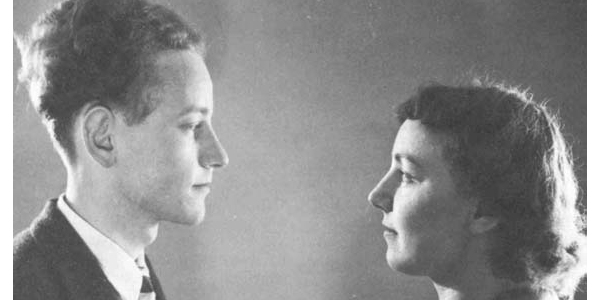
Extract from an interview Louise Huber gave to Verena Bachmann in 2003, first published in German in ‘Astrologie Heute’, recently translated into English by Sue Lewis. VB: How did you get into esotericism? LH: As a result of the Second World War. I suffered four years of war. Initially I wanted to study sports, then…
-
It had to be them
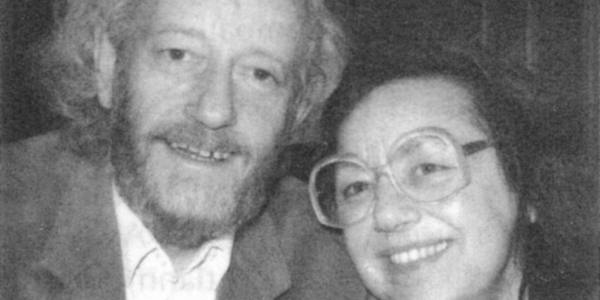
This post was written by Pam Tyler, who was joint founder of APA in 1983. The Hubers rocked my world in 1978. The first time I heard them speak was in Atlanta at the American Federation of Astrologers Conference. I had come from London to sit for the AFA’s Teacher and Professional Certification exam. My…
-
The strange case of the Astrology Centre of America
Updated version 27 Jan 16. If you live in the USA you may well be aware of the online astrological bookshop of the Astrology Centre of America, which holds stocks of, and sells many books on astrology and astrological psychology, including those by Bruno & Louise Huber and by Joyce Hopewell. It has been brought…
-
The Psychological Significance of the Horoscope
Bruno & Louise Huber explain the psychological significance of the horoscope and its five levels in this edited extract from ‘The Astrological Houses’, which was the first and foundational book in their series on astrological psychology. This is one of an occasional series of posts where we highlight some of the basics of astrological psychology…
-
Classical Indicators of Intelligence in the Horoscope
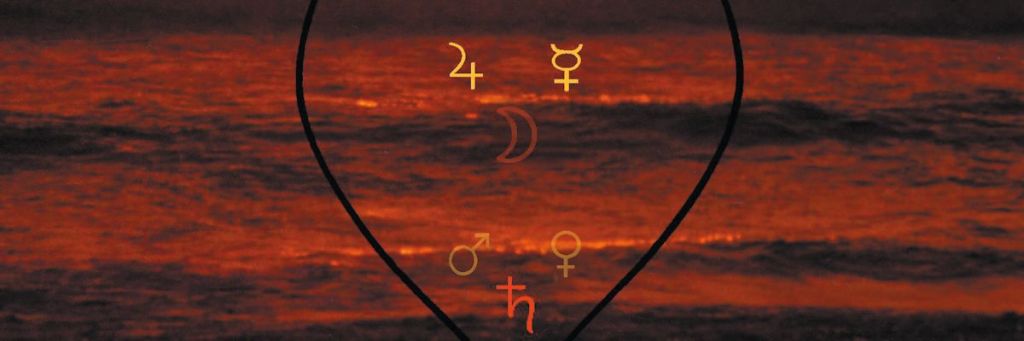
Bruno Huber summarises the three classical indicators of intelligence in the horoscope – Saturn, Mercury and Jupiter, in this extract from his book ‘Astrological Psychosynthesis’. This material was first published in German in 1981 under the title ‘Intelligenz im Horoskop’, and provides a good astrological-psychological background to the previous blog post ‘Why did I do…
-

Simplicity
You may have heard the phrase “keep it simple, stupid” (or K.I.S.S. as it is sometimes written in abbreviated form). Simplicity is one of the transpersonal qualities identified in Assagioli’s Psychosynthesis and it’s a quality which pervades Astrological Psychology. The natal chart is an essay in simplicity – clear, uncluttered, easy to absorb visually and…
 The Astrological Psychology of Bruno & Louise Huber