
Category: People
-
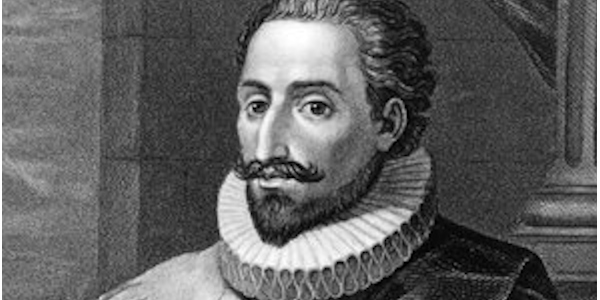
Gifts for Mankind: The Picaresque Bible from Cervantes.
Published over 400 years ago, Don Quixote – a satire of the romance of chivalry – has been translated into over 140 languages and dialects, making it the most-translated book in the world after the bible. Its writer, Miguel de Cervantes, is widely regarded as the greatest writer in the Spanish language who gave human…
-

The Master of Magic Realism. Gabriel Garcia Márquez.
Gabriel García Márquez was a Colombian novelist, short-story writer, screenwriter and journalist, known affectionately as Gabo throughout Latin America. He is considered one of the most significant authors of the 20th century and one of the best in the Spanish language, second only to Cervantes. In 1982 he was awarded the Nobel Prize in Literature. The chart could be a bald,…
-
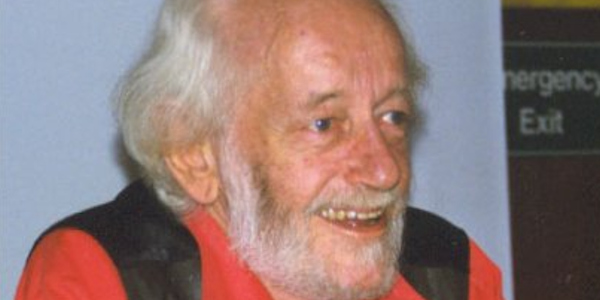
Bruno Huber – a brief biography 2
Written to provide author information related to Bruno’s books. November 29, 1930 – November 3, 1999 Bruno Huber was a Swiss astrologer and psychologist. In 1968, with his wife, Louise Huber, he founded Astrological Psychology Institute, which became an internationally-renowned school of Astrology. It was run according to humanist and psychological principles, based on Dr.…
-

The exhibition, Van Gogh and Britain and the film, At Eternity’s Gate
Vincent Willem Van Gogh was born on 30 March 1853, seven years after the discovery of Neptune, and the anniversary of his birthday was celebrated this year by the opening of a new exhibition at Tate Britain and the launch in Britain of a new film about his life starring Willem Dafoe. Van Gogh was…
-
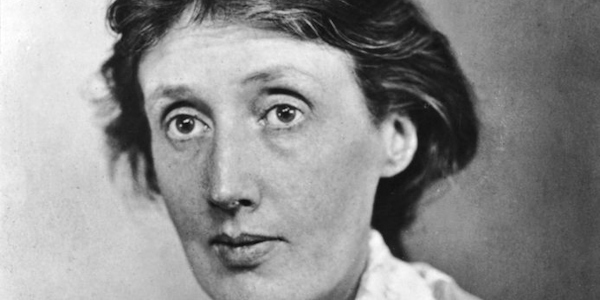
The Eyes of Virginia Woolf
Virginia Woolf was one of the most important 20th-century modernist writers and, like James Joyce, a pioneer in the use of stream of consciousness as a narrative device. At age 59, she put an end to this flow of consciousness by drowning herself in a deep stream, the Ouse River. She had had enough of all the suffering her…
-

The Authors: Wanda Smit
Wanda Smit answers Joyce Hopewell’s questionnaire, which aims to elicit what motivates people to write books about astrological psychology. Wanda is author of the ebook One Cosmic Day, and numerous posts on this blog. 1) What inspired you to write this book? While I was studying the module dealing with Age Point Progression, I wanted…
-

Doris Lessing. Nobel Prize-Winning African Escapee.
Africa is not known for its intellect, but for its underground riches. No wonder Doris Lessing had to escape from Southern Rhodesia (now Zimbabwe) and go to the UK when her Age Point was moving into the 6th house of work. Writing was her work, but she got no recognition for it in Africa. In…
-

The Authors: Joyce Hopewell
Joyce Hopewell answers her own questionnaire, which aims to elicit what motivates people to write books about astrological psychology. Joyce is author of the books The Cosmic Egg Timer, The Living Birth Chart, Using Age Progression and Aspect Patterns in Colour. 1) What inspired you to write your books? I’d wanted to write The Cosmic…
-

The Authors: Sue Lewis
Sue Lewis answers Joyce Hopewell’s questionnaire, which aims to elicit what motivates people to write books about astrological psychology. Sue is author of the book Astrological Psychology, Western Esotericism and the Transpersonal. 1) What inspired you to write this book? While researching for an MA in Western Esotericism, the many parallels I found between the…
-
The Authors: Richard Llewellyn
Richard Llewellyn answers Joyce Hopewell’s questionnaire, which aims to elicit what motivates people to write books about astrological psychology. Richard is co-author of the book The Cosmic Egg Timer: Introducing Astrological Psychology. 1) What inspired you to write this book? Having worked with Bruno and Louise Huber whilst creating the teaching material for the School…
-

The Authors: John Grove
What motivates people to write books about astrological psychology? Joyce Hopewell devised a questionnaire to find out. Here are the answers from John Grove, author of the books Dreams and Astrological Psychology and Life Passages. 1) What inspired you to write this book? As I was finishing my course for my APA diploma in 2015…
-

Gifts for Mankind: Radioactivity from Madame Curie.
Marie Curie, a Polish and naturalised-French physicist and chemist pioneered research in radioactivity. Her achievements included the development of the theory of radioactivity (a term she coined) and the discovery of two elements: Polonium (named after her beloved fatherland) and Radium. Her discovery of radioactivity would later lead to the treatment of cancer with radiation. She literally gave her life to science: she died…
 The Astrological Psychology of Bruno & Louise Huber