
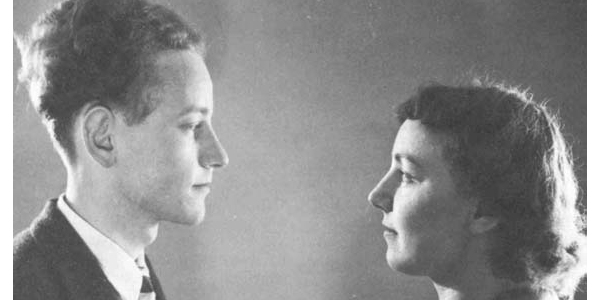
Every great movement begins with a vision — and the story of Astrological Psychology begins with two remarkable people whose life’s work united astrology, psychology, and spirituality into a coherent path of self-understanding: Bruno and Louise Huber.
Their collaboration created a new kind of astrology — one that doesn’t predict events but supports personal growth and psychological integration.
From the Alps to the Inner World
Bruno and Louise Huber were a Swiss couple whose deep curiosity about human nature shaped an entirely new field of study. Bruno’s early training in astrology and Louise’s keen interest in education and human development led them to explore how astrology could reflect not fate, but human potential.
In the 1950s, their lives took a turning point when they went to Italy to work with Dr. Roberto Assagioli, the founder of Psychosynthesis — a branch of psychology focused on self-realisation and the integration of personality.
Under Assagioli’s guidance, they learned that psychological health is not merely the resolution of conflict, but the harmonising of different aspects of the self. This principle would become the foundation of their later work.
Bridging Astrology and Psychology
Assagioli recognised that astrology could offer a symbolic language for psychological processes, and indeed experimented with astrology himself, drawing many birth charts in the process. He encouraged the Hubers to combine their astrological knowledge with Psychosynthesis principles to develop new insights into human development.
Returning to Switzerland, the Hubers spent years refining their ideas, researching thousands of charts, and observing how planetary patterns related to personal growth. Gradually, they formulated what became known as the Huber Method — a system that uses the birth chart as a map of the psyche, showing both inner drives and the path toward integration.
The Founding of the Astrological Psychology Institute (API)
In 1968, the Hubers founded the Astrological Psychology Institute (API) in Adliswil, near Zurich. Their goal was simple but profound: to make astrology a practical tool for self-knowledge, accessible to anyone seeking personal and spiritual development.
At the API, they trained students from around the world, published research, and developed the distinctive features of the Huber method outlined in the previous post.
These innovations transformed astrology into something far more than a predictive system — a psychological mirror through which individuals could understand their potential for growth.
A Vision Rooted in Growth, Not Prediction
Throughout their work, the Hubers emphasised that astrology should liberate, not limit. It should help people understand the forces within them and consciously participate in their own evolution.
This developmental focus distinguishes Astrological Psychology from most other astrological systems. It speaks not only to what we are now, but to what we can become.
A Lasting Legacy
Today, the Hubers’ work continues through international organisations, study groups, and practitioners who use their methods for coaching, counselling, and personal exploration. Their legacy also lives on through the website astrologicalpsychology.org, which preserves their teachings and offers resources for anyone who wishes to learn and apply them.
The books — written in clear, accessible language — remain the best way to begin:
- 📘 The Cosmic Egg Timer — the perfect introduction to Huber ideas.
- 📙 Piercing the Eggshell: The Hubers and their Astrological Psychology— a deeper look at their story and philosophy.
- 📗 The Living Birth Chart — a deeper exploration of Huber methods and techniques.
Inspiration for the Modern Seeker
The Hubers’ vision still resonates in today’s search for meaning. Their integration of astrology and psychology shows that the chart is not a sentence handed down by the stars, but a language of self-awareness — a way of understanding the whole human being in body, mind, and spirit.
Through their pioneering work, Bruno and Louise Huber left us a priceless gift: a path to greater consciousness, balance, and inner freedom.
This is the second post in a series of edited overviews by a new contributor.
The featured image shows the young Bruno and Louise Huber.
 The Astrological Psychology of Bruno & Louise Huber
Leave a comment