

Astrological psychology is mostly used as a practice to help the personal development and evolution of an individual human being. Most practitioners are not particularly concerned with the philosophical underpinnings of a practice that they know works for them. This has perhaps been the case for most astrologers over the ages.
Yet we live in a scientific-reductionist society where the abstract models of scientists and engineers are apparently given more weight than the intuition. And a significant proportion of ‘scientists’ regard the measurable material world as all that there is and subjects such as astrology and religion as some form of ‘hokum’ that does not fit their models.
How did we get here and how can we make sense of the apparent disrespect to a practice that we know works?
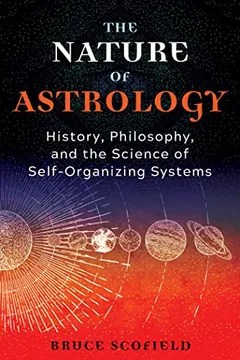
To answer these questions, you could do worse than refer to the book The Nature of Astrology: History, Philosophy, and the Science of Self-Organizing Systems, by American astrologer Bruce Scofield.
Before Ptolemy
Bruce’s book takes us through the story of the development and place of astrology in Western societies from its origins 3000 years ago in the Mesopotamian, ancient Egyptian and Hellenic worlds, based on mankind’s observation and engagement with natural cycles of the earth and solar system. “By the first century BCE, astrology, as a unified body of knowledge and a methodology, had become a part of Hellenistic intellectual culture, and… exerted an influence on Roman society.” The work was carried forward over the next millennium mainly through the writings of Ptolemy (c. 150 CE) in the Almagest and the Tetrabiblos. Of course, astronomy and astrology were synonymous in that interconnected world.
I highlight just a few key stages of astrology’s story since then.
The Renaissance
With the 15/16C Renaissance, inspired by rediscovery of ancient texts, Ficino, Cardano, Dee and Bruno considered nature as a unity, governed by its own laws, alive in a sense (anima mundi) and also astrologically structured, holistic, and organic—basically what we would today call a system… But, also at that time, Pico della Mirandola launched a massive and enduring attack on astrology.
Scientific Revolution
In 17C Bacon and Descartes introduced a way of using thought to project order onto the world by focusing on distinctions and measurements. With Galileo this brought a philosophical view of nature where the certainty of quantification trumps description, resemblance, and pattern perception. This paradigm shift from holism to reductionism was reinforced by the development of capitalism and Puritanism. So, during 17C, astrology reverted to a small collection of middle-class amateurs and almanac writers.
Modern Renewal
Astrology had another resurgence in 19/20C, with the work of Leo explaining astrology as a tool or means of understanding the inner or esoteric laws of nature, Rudhyar elaborating further on how astrology worked and what it was good for – particularly the application of psychological findings in the form of individual therapy or personal consultation. Jung also had a powerful influence on modern astrology, related to his own concepts of synchronicity and archetypes.
In 20C some astrologers, inspired by Jung and Rudhyar, came to embrace depth psychology, synchronicity, and archetypes, and joined with like-minded psychologists and philosophers like Hillman and Grof. Also, the Gauquelins’ studies, a thorough scientific astrological research program, show that certain, limited, astrological principles can be demonstrated through statistical studies.
21C New Paradigm
By early 21C, a kind of theoretical framework for consciousness studies, based on a synthesis of disciplines, was developed that came to be called archetypal cosmology (LeGrice 2009, 2011).
So, astrology has had its ups and downs, is part of the vanguard of forward thinking, but is out of sympathy with the current mainstream materialist/ reductionist culture, which is of course showing signs of reaching its useful limits with phenomena such as climate breakdown and gross inequality.
Scofield suggests that astrology has partly not achieved high recognition because it lacks strong institutions and ways of ranking expertise in different specialities. It is easily labeled as pseudoscience by materialist fundamentalists and denied serious coverage by the mainstream media. Should we care about this?
Maybe we should just make it clear that astrology is a genuine subject that includes a history, theory, research, and a practice. But of course, we really need to encourage the general paradigm shift that will again bring subjective experience, as well as objective measurement, into the frame of our affairs. The scientist is part of the science.
Scofield suggests that astrology is a subject that develops and works with mapping and timing techniques for self-organizing systems. Ilya Prigogine called such systems dissipative structures, organized phenomena that are operating on the edge of a gradient, cheating entropy, extremely volatile, and subject to minute forces (butterfly effect). So, he sees astrology as a special case in the field of systems science, one with established practical applications. That sounds like a good direction to go for a theory of how astrology ‘fits in’ with a new science of qualities, as scientists such as Brian Goodwin suggested was needed.
This book is worth a read if you’re interested in the history and context of astrology, perhaps supplemented by Nick Campion’s A History of Western Astrology (2009).
Shame Scofield never gets to mention Roberto Assagioli, Bruno Huber and astrological psychology…
 The Astrological Psychology of Bruno & Louise Huber
Leave a comment